%201.png)
How to Clean Pool Tiles Above Water Line Like a Pro

There’s nothing better than looking out at a perfectly clean and inviting pool. But that persistent ring of grime along the waterline can quickly spoil the view. While cleaning it is important, preventing it from coming back is the real secret to a low-maintenance pool. This article will show you how to clean pool tiles above water line, but more importantly, it will teach you how to stop those stains from forming in the first place. By understanding how sunscreen, debris, and our hard Colorado water contribute to the problem, you can adopt a simple weekly routine that keeps your tiles pristine all season long.
Key Takeaways
- Understand what causes the ring: That waterline stain is a combination of oils, sunscreen, and debris that sticks to your tiles, often made worse by mineral deposits from Colorado's hard water.
- Prevention is easier than scrubbing: A simple weekly routine of skimming debris, brushing the waterline, and keeping your water chemistry balanced is the most effective way to stop stains before they start.
- Recognize when to call for help: If stains keep returning or you have severe calcium buildup that won't budge with gentle scrubbing, it's time to call a professional to clean your tiles safely and effectively.
What's Causing That Ring Around Your Pool?
If you’ve ever noticed a stubborn, grimy ring around your pool’s waterline, you’re not alone. This common headache, often called a "scum line," can make an otherwise sparkling pool look dirty. This unsightly buildup isn’t caused by just one thing; it’s a combination of different substances that gather right where the water meets the air and tile. Understanding what’s behind this ring is the first step to getting rid of it and keeping your pool looking pristine. Let’s break down the main culprits behind that frustrating stain.
Common Causes of Tile Stains
That ring around your pool is a collection of everything that floats on the water's surface. Every time someone goes for a swim, they leave behind small traces of sunscreen, lotions, and natural body oils. Add to that a mix of dust, pollen, and other airborne debris that settles on the water throughout the day. These substances don’t dissolve. Instead, they cling together and drift to the edges of your pool, where they stick firmly to the tile band. Over time, this greasy film builds up, creating a noticeable and stubborn stain that can be tough to scrub away.
Why the Waterline Is a Problem Area
The waterline is the perfect storm for stains. It’s the meeting point for all those oils and debris floating on the surface, but what makes it especially difficult is the sun. The intense Colorado sun beats down on your pool tiles, baking that grimy film right onto the surface. This process turns a simple layer of gunk into a hard, crusty deposit that won't just wipe away with a cloth. It’s why you can scrub and scrub with little success. The combination of sticky substances and constant sun exposure makes the waterline the most challenging part of the pool to keep clean.
How Colorado's Hard Water Affects Your Pool
Here in Colorado, we have another major factor to contend with: hard water. If you see a white, chalky film on your tiles, you're looking at calcium buildup. This happens when our region's mineral-rich water evaporates, leaving calcium deposits behind. This scale then mixes with the oils and dirt, creating an even tougher, crustier stain. Unbalanced water chemistry can make this problem much worse. Keeping your pool's chemistry in check is crucial for preventing scale buildup. Our professional cleaning and maintenance services can help ensure your water is perfectly balanced to fight these hard water effects.
How to Clean Pool Waterline Tiles
Tackling that stubborn ring around your pool doesn't have to be a huge chore. With the right approach and a little bit of elbow grease, you can get your tiles sparkling again. Let's walk through the process, from gathering your tools to scrubbing away the grime, so you can get back to enjoying your beautiful Colorado pool.
Supplies and Tools You'll Need
First things first, let’s get your cleaning kit ready. The tools you need will depend on your pool’s surface, so it’s important to use the right ones to avoid scratches.
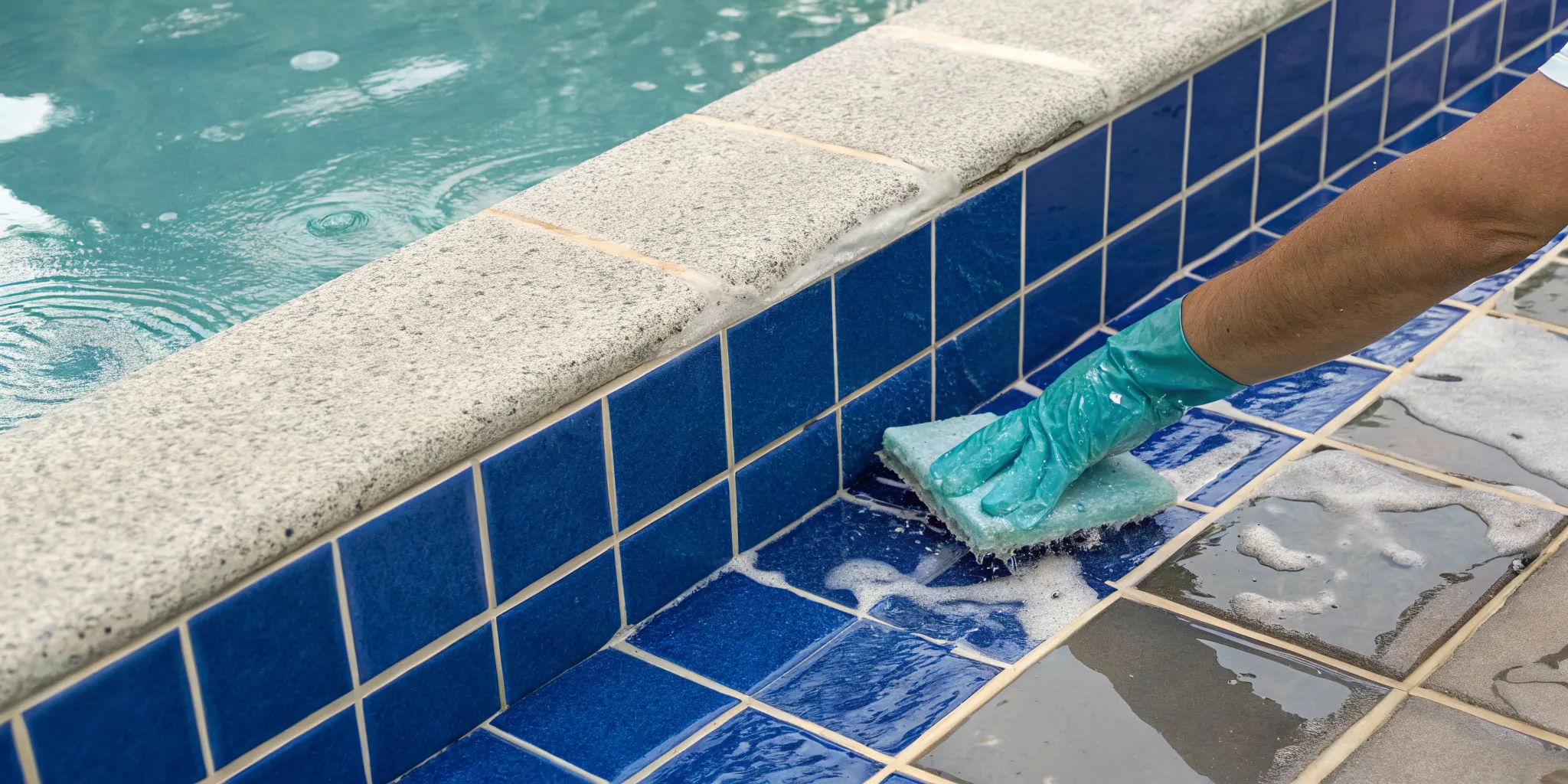
For vinyl and fiberglass pools, stick with gentle options like soft cleaning pads, microfiber cloths, and a specialized soft brush. For concrete or ceramic tile pools, you can use something a bit tougher, like a pumice stone or a tile cleaning block. Always wear safety goggles and chemical-resistant gloves to protect yourself. If you need to stock up, we can help you find the perfect supplies and chemicals for your specific pool type.
Effective DIY Cleaning Solutions
You don’t always need harsh chemicals to get the job done. Two of the most effective and pool-safe cleaners might already be in your pantry.
A simple mix of equal parts white vinegar and water in a spray bottle works wonders on mineral deposits. Just spray it on the tile, let it sit for a few minutes, and then scrub gently with a soft brush before rinsing. For tougher spots, a baking soda paste is a great option. Mix baking soda with a small amount of water to form a paste, apply it to the stains, let it sit for about 15 minutes, and then scrub and rinse. These DIY solutions are gentle on your tiles and the environment.
A Step-by-Step Guide to Removing Stains
Ready to get started? Here’s a simple process for cleaning your waterline tiles.
- Lower the water level. Drop the water about six inches below the tile line. This gives you a dry surface to work on, which helps the cleaner work more effectively.
- Work in small sections. Focus on a three-foot section at a time. Spray your chosen cleaner directly onto the stains and let it sit for a couple of minutes, but don’t let it dry completely.
- Scrub gently. Using your brush, pad, or pumice stone, apply steady, gentle pressure to scrub the stains away.
- Rinse and repeat. Rinse the area thoroughly with pool water and move on to the next section.
If the stains won’t budge, it might be time for a professional touch. Our cleaning and maintenance team can handle even the most stubborn buildup.
Staying Safe While Using Chemical Cleaners
Your safety is the top priority, especially when working with pool chemicals. Always wear long, chemical-resistant gloves and safety goggles to protect your skin and eyes from splashes. Make sure you’re working in a well-ventilated area to avoid inhaling fumes.
If you’re using a stronger, acid-based cleaner, remember this critical rule: always add acid to water, never the other way around, to prevent a dangerous chemical reaction. Keep some vinegar or baking soda nearby to neutralize any accidental spills. Following these safety precautions ensures your cleaning project goes smoothly and safely from start to finish.
How to Prevent Future Pool Tile Stains
After putting in the effort to get your pool tiles sparkling, the last thing you want is for that grimy ring to come right back. The good news is that preventing future stains is much easier than scrubbing them away. A few simple habits can keep your waterline looking fresh all season long, saving you time and a lot of elbow grease. It’s all about staying ahead of the buildup with a consistent and proactive approach. By incorporating a few small tasks into your weekly routine, you can stop stains from forming in the first place. This means less time spent on intensive cleaning and more time enjoying your beautiful pool with family and friends.
Think of it this way: maintaining a clean tile line is like tidying your kitchen every night. A few minutes of wiping counters and putting things away prevents a massive cleaning project on the weekend. The same principle applies to your pool. A little bit of regular care stops oils from sunscreen, minerals from our hard Colorado water, and general debris from creating a stubborn, hard-to-remove stain. This isn't about adding hours of work to your schedule. Instead, it's about smart, efficient habits that make a huge impact. From simple skimming to keeping your water chemistry in check, these preventative measures are your best defense against waterline buildup.
Create a Simple Maintenance Routine
Think of your pool like any other part of your home; a little regular upkeep goes a long way. Make it a habit to skim the surface of your pool to remove leaves, bugs, and other floating debris. This simple step prevents dirt and oils from settling along the waterline where they can cause stains. It only takes a few minutes but can save you hours of scrubbing later. If you find that life gets too busy to keep up, you can always count on a professional cleaning and maintenance service to keep your pool in top shape for you.
Tips for Balancing Your Water Chemistry
That chalky white film on your tiles is often calcium buildup, a common issue thanks to Colorado's hard water, evaporation, and unbalanced chemistry. Keeping your pool water properly balanced is one of the most effective ways to prevent scale from forming in the first place. Regularly test your water’s pH, alkalinity, and calcium hardness levels. When these levels are off, minerals fall out of the solution and cling to your tiles. Using the right supplies and chemicals will help you maintain the perfect balance and stop mineral deposits before they start.
Simple Weekly Habits for a Cleaner Pool
You don’t need to dedicate your entire weekend to pool care. Just spending a couple of minutes each week brushing the waterline with a soft-bristled pool brush can make a huge difference. This quick task disrupts any early-stage buildup of oils, dirt, and calcium, preventing it from hardening into a stubborn stain. Think of it as a preventative measure that keeps small problems from becoming big ones. It’s a small habit that delivers a big reward: a consistently clean and inviting pool that's always ready for a swim.
Protecting Your Tiles in Colorado
When you do need to spot-clean, reach for products designed specifically for pools. Household cleaners might seem like a quick fix, but they can contain harsh chemicals that damage your tile grout or throw off your water chemistry. Pool-specific cleaners are formulated to tackle waterline stains without causing unintended problems. Investing in the right products protects your tile and ensures your pool remains a safe, healthy environment for everyone. It’s a smart way to safeguard your investment and keep your pool looking its best for years to come.
When to Call a Professional for Tile Cleaning
While tackling pool maintenance yourself can be rewarding, some jobs are best left to the experts. Knowing when to put down the scrub brush and pick up the phone can save you time, frustration, and even prevent costly damage. If you’re dealing with stubborn stains or issues that go beyond simple surface cleaning, a professional has the tools and experience to restore your pool’s sparkle safely and effectively. It’s not about giving up; it’s about making a smart choice for the health and beauty of your pool.
Signs You Need an Expert's Help
If you feel like you’re fighting a losing battle with your pool tiles, it might be time to call for backup. One of the clearest signs is when stains keep coming back, even after you’ve cleaned the tiles and balanced your water chemistry. This often points to an underlying issue a DIY approach can’t fix. Another major red flag is severe calcium buildup that won’t come off with regular cleaning methods. This level of scaling requires specialized techniques to remove without harming the tile. Finally, if you notice any damaged or loose tiles, stop and call a professional to avoid more serious problems.
The Advantages of a Professional Cleaning
Hiring a professional for your tile cleaning comes with some serious perks. We have access to stronger tools and solutions that are more effective than what you can typically buy at a store. These professional-grade, pool-specific cleaners are designed to handle the unique challenges of waterline stains without damaging your tile or grout. This expertise delivers a deeper, longer-lasting clean and saves you from the trial-and-error of testing different products. A professional service takes the guesswork out of the equation, ensuring your pool tiles look their best while you get to relax.
How Our Cleaning and Maintenance Service Works
When you schedule a cleaning and maintenance service with us, our certified technicians follow a proven process for perfect results. For tough stains, we often start by lowering the waterline to get better access to the tiles for a more thorough cleaning. We use powerful chemicals with precision, knowing exactly how long to let them sit to dissolve buildup without eating away at your grout. Our team understands the specific challenges of Colorado’s water, allowing us to tackle even the most stubborn calcium deposits and restore your tile line.
Frequently Asked Questions
How often should I be cleaning my pool's waterline? For prevention, a quick scrub with a pool brush once a week is a great habit. This simple step stops oils and dirt from building up. As for a more thorough cleaning with a dedicated tile cleaner, you might only need to do it a few times during the pool season. If you notice a ring forming quickly, it could be a sign that your water chemistry needs adjusting.
My pool ring looks more white and crusty than greasy. What's the difference? A greasy or dark ring is typically caused by a buildup of body oils, sunscreen, and dirt that floats on the water's surface. A white, chalky line, however, is a classic sign of calcium scale. This is very common here in Colorado due to our hard water. As water evaporates, it leaves these mineral deposits behind. Often, you'll find a combination of both, creating a particularly stubborn stain.
Is it safe to use a household cleaner like a bathroom spray on my pool tiles? I would strongly advise against it. While those cleaners are great for tubs and sinks, they contain chemicals and soaps that can cause serious issues in your pool. They can damage your tile's grout, throw your water chemistry completely out of balance, and even create foam. It's always best to stick with products specifically designed for pools to protect your investment.
Will using a pool cover help prevent waterline stains? Yes, a pool cover is one of your best tools for prevention. It significantly reduces the amount of dust, pollen, and other debris that lands on the water's surface. A cover also limits water evaporation, which helps slow down the concentration of minerals that lead to calcium buildup along the tile line.
What should I do if I notice the grout between my tiles is cracking or missing? If you see damaged grout, it's best to address it right away instead of trying to scrub the area. Missing or cracked grout can allow water to get behind your tiles, which can cause them to loosen and fall off. This is more than a simple cleaning issue; it's a sign that you may need professional repairs to prevent more significant damage.
Related Blogs